AI Engineering Studio in Armenia: Specialist, Studio or Agency
A practical comparison for teams choosing an AI delivery model in Armenia
Workflow fit, TCO, risk, ownership, proof quality and first production-safe slice
How to support the broad Armenia AI landing page with long-tail decision criteria
AI engineering studio Armenia, AI specialist Armenia, AI agency and delivery model comparison
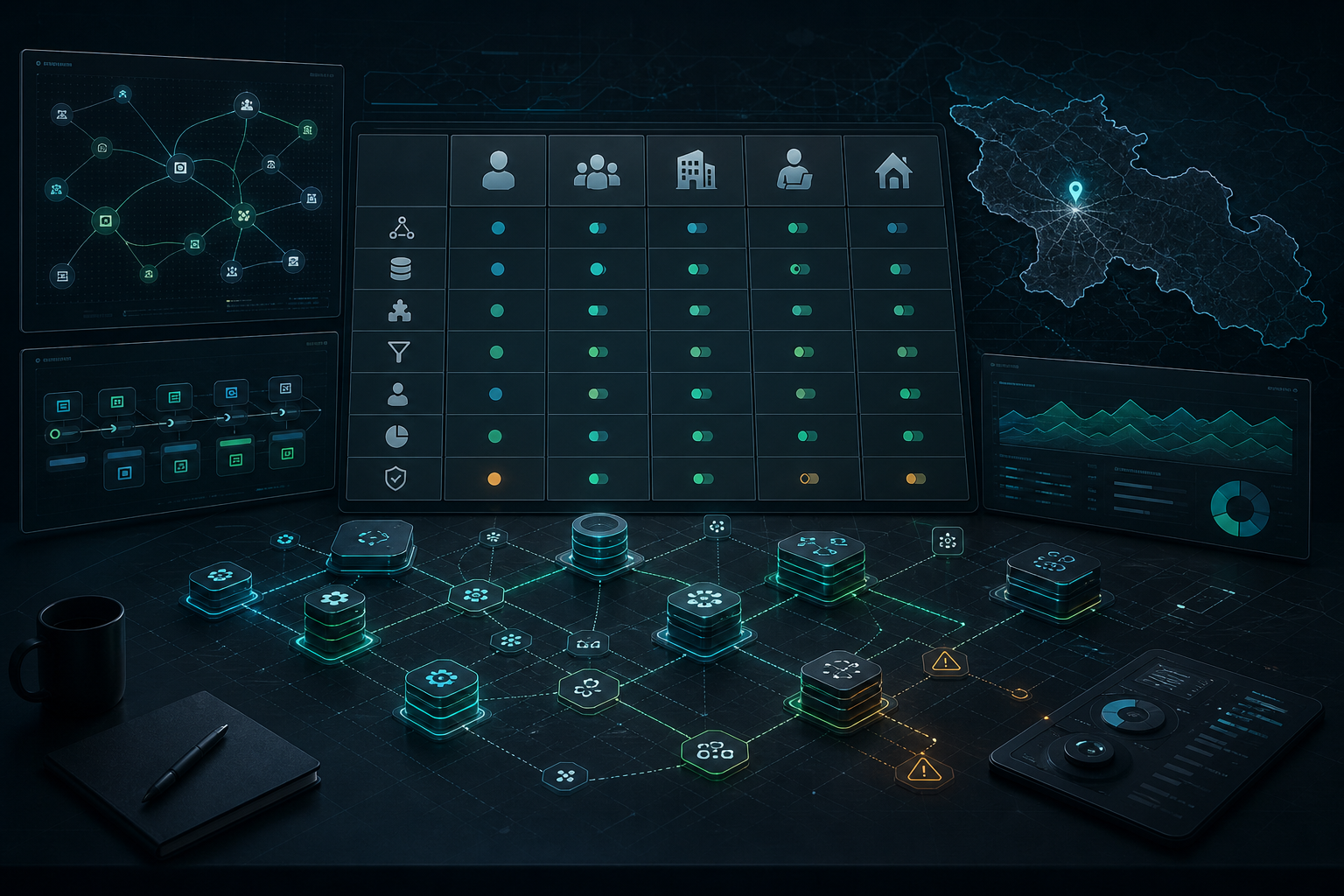
$ compare ai_delivery_models --market armenia
> options: specialist / freelancer / studio / agency / in_house
> score: workflow / data / integrations / evaluation / delivery / ownership
> output: best_fit_for_scope, not universal vendor labelWhat this comparison is really about
"AI engineering studio Armenia" is a useful search query only when it leads to a practical vendor decision. A company is not choosing a label. It is choosing a delivery model for a workflow that may touch data, CRM records, documents, messengers, internal tools, human approvals and production deployment.
Broad commercial intent still belongs to the AI developer and AI specialist in Armenia landing page. This article is narrower: it compares an independent specialist, AI engineering studio, general software agency, freelancer and in-house hire so a team can choose the format that fits scope, risk and ownership.
The important question is not "which option sounds most advanced". It is "which option can safely turn this business process into a tested AI system and leave us with control after launch".
The options you are comparing
Most AI projects fail to compare like with like. A consultant, freelancer, studio, agency and in-house employee have different economics and risk profiles.
| Option | Strong when | Weak when | Practical risk |
|---|---|---|---|
| Independent AI specialist | You need diagnosis, architecture, vendor review or a narrow technical decision | The project needs continuous delivery, UI, backend, integrations and support | Clear thinking, but handoff can become a second project |
| Freelance AI developer | The task is scoped, technical and easy to validate | Discovery, integrations, security and support are still unclear | Fast start, but availability and maintenance must be explicit |
| AI engineering studio | The work needs architecture, AI workflow, product UI, backend, integrations, tests and deployment | You only need a short workshop or advice | Higher start cost, but lower coordination risk for production |
| General software agency | AI is one module inside a larger software roadmap | The team treats AI as a prompt wrapper without evaluation | Good project management, but weak AI-specific risk control |
| In-house hire | AI becomes a permanent product or operations capability | You need proof before hiring, onboarding and tooling are ready | Best long-term control, slow path to first evidence |
None of these is universally best. A narrow audit can fit an independent specialist. A clear prototype can fit a freelancer. A workflow that connects business data, operators and live systems usually needs studio-level delivery or a senior engineer who can cover architecture, build, test, deploy and support.
Weighted decision matrix
A comparison without weights usually rewards the best sales demo. Use weights that match the real risk of the workflow.
| Criterion | Weight | What to check | Evidence to request |
|---|---|---|---|
| Workflow fit | 20% | Can the provider map users, inputs, decisions, errors and approval points? | Process map, discovery questions, smallest useful slice |
| Data readiness | 17% | Do they inspect documents, CRM fields, permissions, freshness and update flow? | Source inventory, privacy notes, retrieval or sync plan |
| Integration depth | 17% | Can they connect APIs, CRM, messengers, n8n, databases, logs and internal tools? | Integration checklist or architecture sketch |
| Evaluation method | 16% | Do they define tests, bad cases, refusal rules and human review? | Acceptance table, failure examples, review gates |
| Delivery discipline | 14% | Do they work with repo, reviews, build checks, deployment notes and rollback? | Build/test evidence, release notes, deployment plan |
| Ownership after launch | 10% | Who updates prompts, data, logs, incidents and monitoring? | Support boundary, handoff package, maintenance rhythm |
| Commercial fit | 6% | Is the scope realistic for budget, speed and risk? | Phased estimate with assumptions |
For a workshop, reduce integration and delivery weight. For a system that writes to CRM, sends messages or changes operational status, increase evaluation, human approval and ownership.
Three typical scenarios
Scenario 1: You need clarity before build
If the team is unsure what to automate, do not start by hiring the fastest implementer. Choose a specialist or studio that can run a narrow audit: map one process, inspect available data, identify unacceptable errors and recommend whether the next step should be RAG, automation, an internal tool, an AI agent or no AI yet.
The output should be a decision document. It should say what to build, what to postpone and what has to be cleaned before AI becomes useful.
Scenario 2: You need a first production-safe pilot
If the process is clear, choose for delivery discipline. A good pilot is not a disconnected demo. It touches real data safely, has test cases, has a human review point and can be deployed, monitored or discarded with evidence.
This is where an AI engineering studio can be practical: one delivery shape can cover AI workflow, product interface, backend integration, deployment and support notes without splitting responsibility across many vendors.
Scenario 3: You need long-term AI capability
If AI will become part of product or operations, the best model may be mixed: external audit and first slice, then internal ownership. In that case, judge the provider by handoff quality: repository structure, prompt/version history, evaluation cases, deployment notes, documentation and training for the internal team.
Avoid closed black boxes. The company should own enough context to operate, change and replace the system later.
Strong and weak signals
Strong signals are concrete.
- The provider asks about the business process before naming a model.
- They separate data problems from model problems.
- They explain where AI should not decide alone.
- They can show proof with task, solution, result, stack and limits.
- They discuss logs, evaluation, fallback and support before launch.
- They recommend a smaller scope when the requested scope is too broad.
Weak signals are usually louder.
- "We will automate everything with AI" before seeing the workflow.
- "Best studio" or "top agency" without methodology and proof.
- A demo that is not connected to data, APIs or user decisions.
- No answer for private data, model errors, prompt changes or ownership.
- A portfolio with screenshots but no architecture or outcomes.
The point is not to distrust ambition. The point is to convert claims into evidence.
Local proof check
Use the aicoding.am case studies as a proof check, not as a ranking list. Narciss CRM shows production software discipline around orders, inventory, CRM, delivery, POS and integrations. AmoBit Inbox shows controlled messaging runtime, protected media, workspace boundaries and backend source of truth.
Those examples matter because useful AI projects rarely live only inside a model call. They live inside operational systems: CRM records, documents, queues, messengers, permissions, logs and deployment constraints.
When comparing a specialist, studio or agency, ask whether their proof shows the same operational thinking. If proof is only prompts and screenshots, it may be enough for exploration, but not for production delivery.
Questions to ask before choosing
1. Which workflow would you map first?
2. Which data sources must be inspected before estimating?
3. Which decisions must remain human-approved?
4. Which integrations create the highest risk?
5. How will the first version be evaluated?
6. What would make you recommend not building AI yet?
7. What do we own after launch: code, prompts, tests, logs and documentation?
8. What is the smallest useful production slice?
Good answers should be specific to your workflow. Generic answers usually mean the provider is selling a category rather than solving the system.
Practical next step
Start with a one-page brief: workflow, users, data sources, tools, risk, approval points and the smallest useful result. Then score each option with the weighted matrix above.
If the shortlist is specifically freelancer versus studio versus agency, use the newer AI vendor selection matrix before comparing proposals.
If you need a local AI engineering recommendation in Armenia, start with the project brief. If you need the broader service context, use the AI specialist in Armenia page.
Where This Applies
Vendor comparison, AI audit routing and first production-safe pilot planning
This article is useful when a company in Armenia needs a practical AI delivery model instead of a generic vendor label.
- Founders comparing an AI specialist, freelancer, studio, agency and in-house hire.
- Operations teams deciding whether to start with audit, pilot or long-term AI ownership.
- Companies that need local AI context while keeping delivery and support criteria clear.
score = workflow_fit * 0.20
  + data_readiness * 0.17
  + integration_depth * 0.17
  + evaluation_method * 0.16
  + delivery_discipline * 0.14
  + ownership_after_launch * 0.10
  + commercial_fit * 0.06;
choose(delivery_model_for_scope);
reject(label_without_operational_proof);