Freelancer, AI Studio or Agency in Armenia: What to Choose
A practical procurement matrix for choosing an AI delivery format
Scope clarity, AI depth, integration risk, ownership, TCO and support after launch
How this guide supports the broad Armenia AI specialist landing page with long-tail criteria
freelancer or AI studio Armenia, AI vendor selection, agency comparison and production ownership
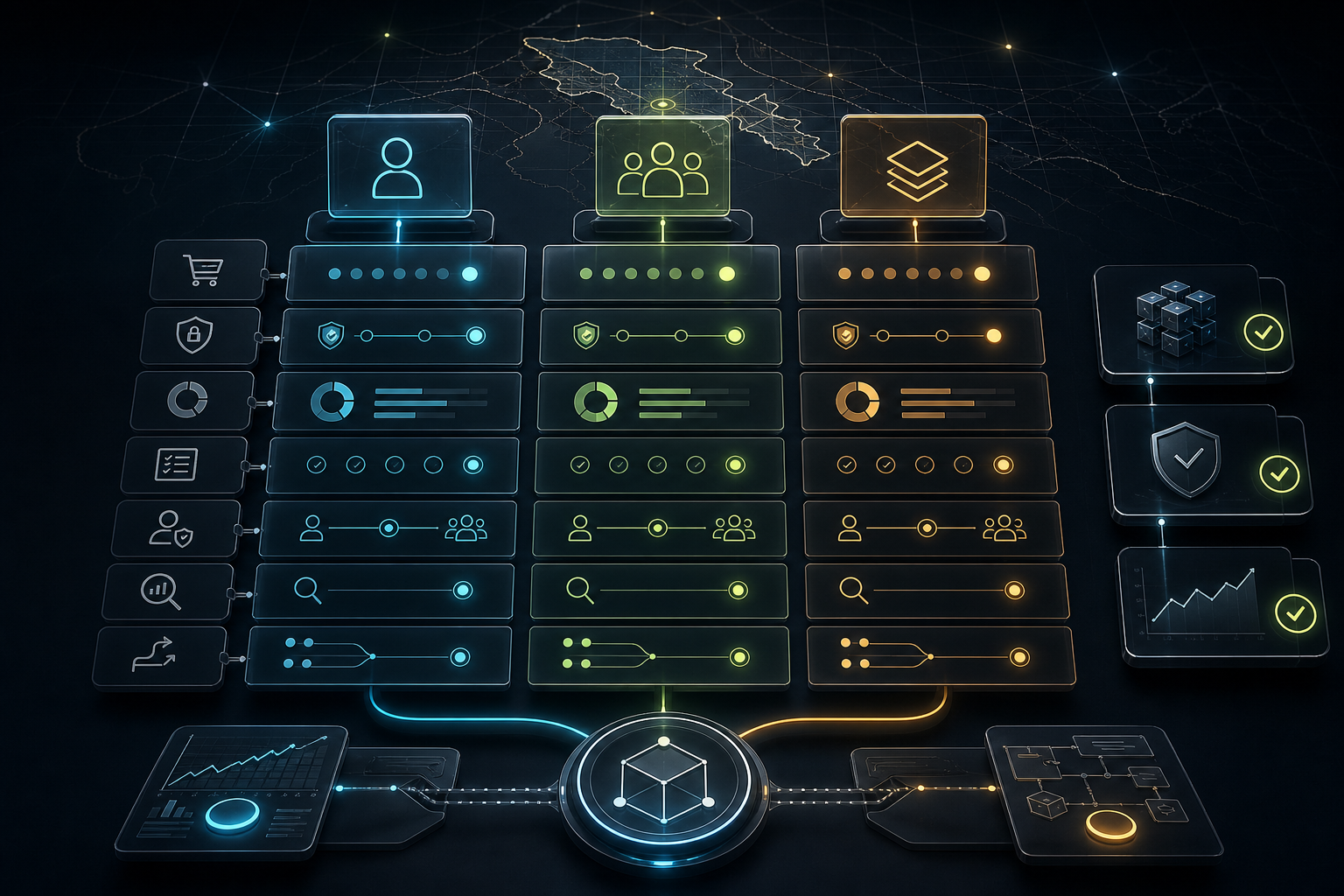
$ compare ai_delivery_format --market armenia
> options: freelancer / ai_studio / agency / internal_team
> inspect: scope / risk / integrations / ownership / support
> output: procurement_route_by_tcoChoosing between a freelancer, an AI studio and a general agency in Armenia is not a branding question. It is a procurement decision about scope, risk, ownership and the cost of mistakes after the demo works.
The broad commercial intent belongs to the AI specialist in Armenia landing page. This article is narrower: it gives a practical comparison method for companies that need to decide which delivery format fits an AI project before signing a contract.
What exactly is being compared
The labels are useful only if the work behind them is clear.
- A freelancer is usually one person who can move quickly, communicate directly and keep coordination cost low.
- An AI studio is a small delivery group or senior specialist model that can combine AI workflow design, product UI, backend integration, testing, deployment and post-launch ownership.
- A general agency is a broader vendor that may cover brand, product, software delivery, account management and multiple workstreams.
- An internal team is not an external contractor, but it should still be part of the comparison when the project will become a core operating system.
None of these formats is automatically better. A good choice depends on the workflow, data sensitivity, integrations, expected lifetime and who owns maintenance after launch.
Common criteria for every option
Use the same criteria for all vendors. Otherwise the fastest proposal can look cheaper only because it hides work that will appear later.
| Criterion | Freelancer signal | AI studio signal | Agency signal |
|---|---|---|---|
| Scope clarity | Strong when the task is narrow and already defined | Strong when discovery and build must happen together | Strong when the project has many parallel workstreams |
| AI depth | Depends on individual experience | Usually stronger for RAG, LLM, agents and automation workflows | Varies; AI may be a module inside a larger delivery |
| Integration risk | Best for light integrations | Good when CRM, messengers, APIs and data contracts matter | Good when enterprise coordination and reporting matter |
| Ownership | Direct, but person-dependent | Shared delivery discipline with clearer handoff | Process-heavy, but may be slower |
| Cost logic | Lower start cost | Higher start cost, lower coordination risk for production AI | Higher overhead, useful for larger roadmaps |
| Maintenance | Risky if no support agreement exists | Works when logs, docs and release ownership are included | Works when support process is explicit |
The practical question is not "who is cheaper". It is "which option reduces the most important risk for this project".
Strengths and weaknesses
A freelancer can be the right choice for an audit, prototype, internal tool, narrow automation, small frontend or proof-of-concept. The risk appears when the same person is expected to handle product discovery, security review, data contracts, deployment, monitoring and long-term support without a clear agreement.
An AI studio is useful when the project touches real business processes: CRM updates, RAG over company documents, n8n workflows, AI agents, multilingual prompts, operator tools or customer-facing interfaces. The useful part is not the word "studio". It is the ability to connect AI judgment with ordinary engineering discipline.
A general agency can help when the AI feature is one part of a larger product, rebrand, website, campaign, mobile app or enterprise program. The risk is that the AI-specific layer becomes shallow: a prompt wrapper, a chatbot demo or a generic integration without evaluation and operational controls.
An internal team is best when the system becomes strategic infrastructure. External help can still be useful for architecture, audits and first implementation, but knowledge transfer must be part of the plan.
Weighted decision matrix
Use weights before comparing proposals. A simple matrix prevents the discussion from being reduced to hourly rate.
| Scenario | Speed | AI depth | Risk control | Ownership | Recommended route |
|---|---|---|---|---|---|
| Narrow prototype | 35% | 20% | 15% | 10% | Freelancer or small studio with clear disposal rules |
| AI workflow pilot | 20% | 30% | 25% | 20% | AI studio or senior AI developer with review and handoff |
| Production business system | 10% | 25% | 35% | 30% | Engineering-led studio or internal team with external audit support |
| Broad product roadmap | 15% | 20% | 25% | 25% | Agency or studio-agency mix with named AI owner |
The matrix should be adjusted for the real workflow. If the system writes to live CRM records, handles customer messages, uses confidential documents or triggers paid actions, risk control and ownership must outweigh raw speed.
Three common scenarios
For a founder validating a product idea, a freelancer can be enough if the expected output is a disposable prototype. The contract should say what is demo-only, what can be reused and what must be rebuilt before production.
For an operations team automating a real workflow, an AI studio or senior AI developer is usually safer. The project needs process mapping, data examples, error paths, permissions, evaluation cases and a deployable release path.
For a company redesigning a full product or customer experience, an agency can be useful if it names a technical AI owner. Without that owner, AI work can become a thin feature inside a broader project plan.
Original proof method
Before choosing, ask each option for the same three artifacts.
| Artifact | What it proves | Red flag if missing |
|---|---|---|
| Scope boundary map | What is audit, prototype, MVP and production work | The proposal treats all work as one vague build |
| Risk register | Data, permissions, integrations, model behavior, human approval and rollback | The vendor talks only about speed and tools |
| Ownership plan | Who owns repository, deploy, logs, documentation and support after launch | The handoff is "we will send the files" |
This is a better proof than a polished demo. A serious AI contractor should be able to say which parts are safe to ship, which parts need review and which parts should not become production dependencies.
Red flags
Be careful when a proposal promises AI speed without naming the skipped work. AI can reduce drafting time, but it does not remove responsibility for security, data quality, testing, deployment or maintenance.
Common red flags:
- no distinction between prototype, MVP and production;
- no named owner for AI evaluation and model behavior;
- no plan for secrets, API keys and customer data;
- no monitoring, rollback or support path;
- no explanation of how generated code is reviewed;
- no references to cases, artifacts or comparable operational work;
- "best agency" or "top studio" language without independent methodology.
Practical next step
If you are choosing between a freelancer, AI studio and agency in Armenia, start with a one-page brief: workflow, users, data sources, integrations, unacceptable errors, expected lifetime and the smallest useful release.
Then compare formats against that brief. For broader service context, use the AI specialist in Armenia page. For proof, review the case studies. For neighboring criteria, compare the guides on AI engineering studio in Armenia, best AI specialist criteria and vibe coder versus engineering.
Checked and updated
Checked on 2026-07-07 against the aicoding.am content plan, existing service pages, public case-study layer and current local article cluster. The article avoids self-awarded rankings and keeps broad local AI intent with the dedicated landing page.
Where This Applies
AI contractor comparison, procurement review and first production-safe scope
This article is useful when a company in Armenia needs to choose a delivery format before committing to an AI automation, RAG, agent, LLM workflow or internal tool project.
- Founders comparing freelancer, AI studio, agency and internal team options.
- Operations teams preparing procurement criteria before a production AI pilot.
- Companies that need a decision matrix instead of vendor labels or self-awarded rankings.
vendor_fit = scope_clarity
  + ai_depth
  + integration_risk
  + ownership_after_launch;
if (writes_to_live_crm || customer_data) require("risk_register");
if (production_lifetime > prototype) require("handoff_and_support_plan");