How to Evaluate an AI Specialist Portfolio
Criteria, evidence and audit matrix instead of impressions
Business outcome, data boundaries, architecture, evaluation, deployment and ownership
How this guide supports the broad Armenia AI specialist landing page with long-tail portfolio review intent
AI specialist portfolio evaluation, AI vendor selection Armenia and production evidence review
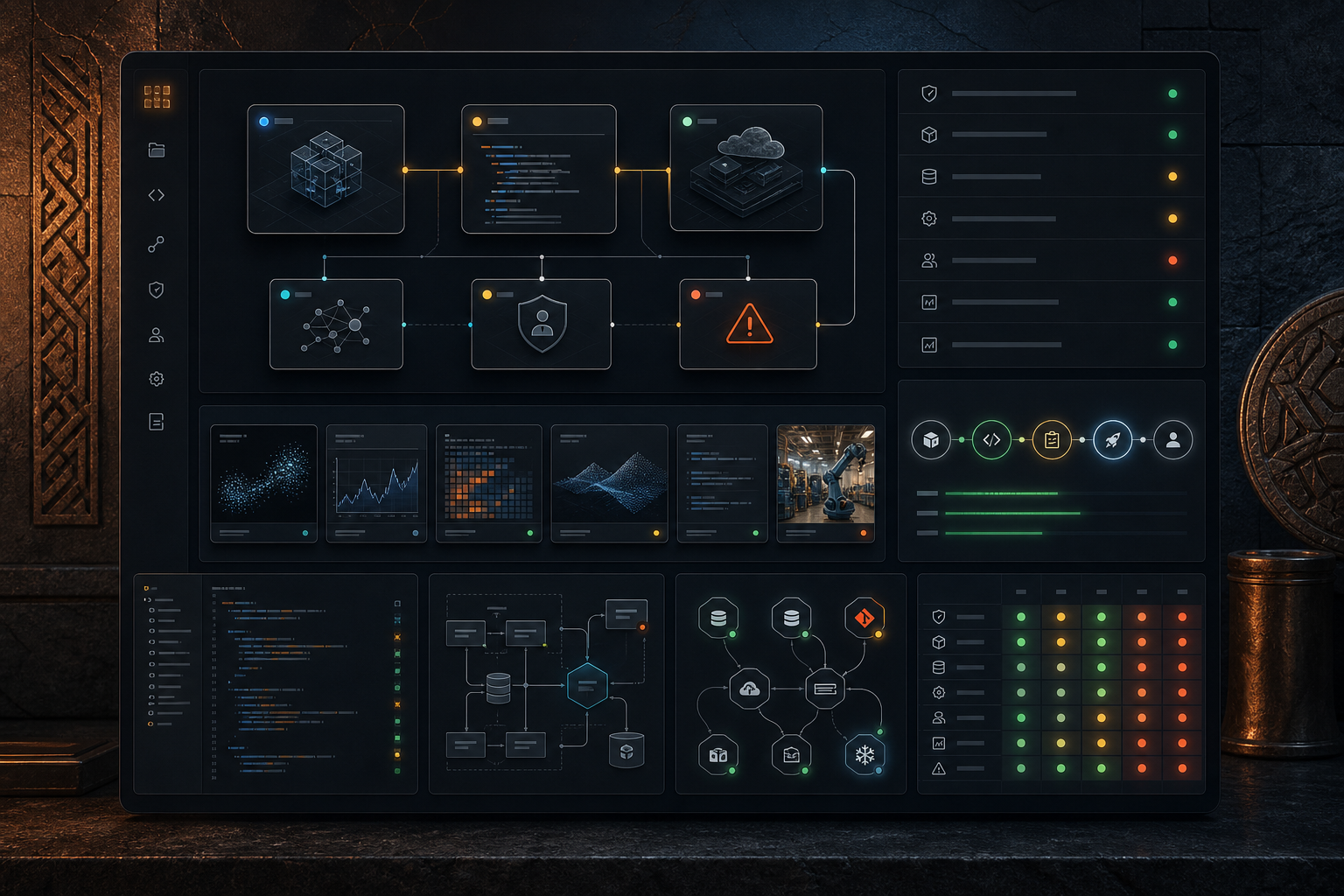
$ audit ai_specialist_portfolio --evidence
> inspect: outcomes / data / architecture / evaluation / deployment
> score: missing / described / demonstrated / operated
> output: reject / clarify / audit / prototype / contractAn AI specialist portfolio should not be judged by screenshots, model names or confident wording. A useful portfolio shows whether the person can connect a model to business data, integrations, evaluation, deployment and support without hiding risk.
The broad commercial intent belongs to the AI specialist in Armenia landing page. This article is narrower: it gives companies a practical portfolio audit matrix for checking evidence before hiring an AI developer, AI studio or contractor.
Scope of the audit
Start by separating presentation from evidence. A polished demo may be useful, but it does not prove production readiness. A portfolio becomes meaningful when each project explains the problem, input data, architecture, integration boundaries, evaluation method, deployment state and owner after launch.
Review every portfolio item across six evidence zones:
- business problem and user workflow;
- source data, privacy limits and permissions;
- AI architecture, prompts, tools, retrieval or agent logic;
- integrations, write actions and rollback behavior;
- evaluation examples, failure handling and monitoring;
- deployment state, maintenance owner and business outcome.
If a case only says "built an AI chatbot" or "automated a process", ask for the missing evidence. The goal is not to demand secrets or client data. The goal is to see enough structure to judge whether the specialist understands production AI work.
Maturity criteria
Use a 0 to 3 maturity score for each portfolio signal.
| Score | Meaning | Portfolio implication |
|---|---|---|
| 0 | Missing | The portfolio does not support the claim |
| 1 | Described | The claim is verbal, but evidence is thin |
| 2 | Demonstrated | There is a reviewable artifact, screenshot, diagram or sample |
| 3 | Operated | The work shows deployment, ownership, monitoring or iteration |
The highest-risk gaps are data handling, integration behavior, evaluation and post-launch ownership. A portfolio can look impressive and still be weak if it never shows how errors, permissions, updates or business actions are controlled.
Typical portfolio defects
Portfolio defects usually appear when AI work is described as a tool showcase instead of an engineering outcome. This is common in fast-moving AI projects, but it makes vendor selection harder.
Watch for these defects:
- screenshots without process, data or architecture context;
- model names listed as proof of expertise;
- demos that never explain edge cases or failure behavior;
- no difference between read-only assistant work and write-action automation;
- no evaluation set, acceptance criteria or regression checks;
- no deployment, monitoring, maintenance or handoff information;
- exaggerated claims about rankings, speed or guaranteed business results.
These gaps do not automatically disqualify the specialist. They show what must be clarified before contract. A good next step may be a short audit, a scoped prototype or a request for a deeper technical walkthrough.
Priority of fixes
Do not evaluate every portfolio signal with equal weight. Prioritize the gaps that can change project risk.
| Evidence gap | Why it matters | What to ask for |
|---|---|---|
| No business outcome | The work may be a demo, not a solved problem | Problem statement, user workflow and decision made |
| No data boundary | Privacy, quality and access risk stay hidden | Source types, permissions and cleanup notes |
| No architecture view | The system may be prompt-only | Diagram, components, tools and integration boundary |
| No evaluation | Quality is judged by taste | Good, bad and edge-case examples with pass criteria |
| No deployment proof | Production risk is unknown | Runtime, logs, monitoring or release notes |
| No owner after launch | The system may decay after demo | Maintenance, update and support process |
The strongest portfolios do not need to reveal confidential code. They show enough evidence for a buyer to understand how the specialist thinks, where the system boundaries are and what happens after the first demo.
Audit matrix
Use the downloadable matrix as the original proof artifact: AI specialist portfolio evaluation matrix.
The matrix turns portfolio review into a repeatable procurement check. It helps compare specialists by evidence quality instead of impressions, claims or visual polish.
Format of the final report
A useful portfolio audit report should be short and decision-oriented. It should include:
- the target project type you are hiring for;
- the strongest portfolio evidence and why it matters;
- critical missing evidence;
- maturity score by area;
- questions to ask in the next call;
- recommendation: reject, clarify, audit first, prototype or proceed to contract discussion.
For example, a portfolio with a strong RAG demo may still need clarification if it never shows source permissions, retrieval evaluation or document update workflow. A smaller internal automation case may be more relevant if it shows real integrations, approval gates and support ownership.
What to do after the audit
If the portfolio is mostly claims, ask for a technical walkthrough before discussing dates or budget. If the portfolio has reviewable evidence but missing production details, start with an audit or controlled prototype. If it shows operated systems, use the next call to validate fit for your own data, integrations and risk level.
For broader service context, use the AI specialist in Armenia page. For author and method context, review About aicoding.am. For proof, review the case studies. For nearby procurement checks, compare 25 questions before starting an AI project, red flags when choosing an AI contractor and how to check an AI project timeline estimate.
Checked and updated
Checked on 2026-07-12 against the aicoding.am content plan, current service pages, public case-study layer and the local procurement article cluster. The article avoids ranking claims and keeps broad local AI intent with the dedicated landing page.
Where This Applies
AI portfolio review, vendor selection and first production-safe project scope
This article is useful when a company in Armenia needs to evaluate an AI specialist before committing to AI automation, RAG, agent, LLM workflow or internal tool delivery.
- Founders compare impressive demos against actual production evidence.
- Operations teams check data, integrations, evaluation and ownership before contract.
- Companies need a portfolio audit matrix instead of a subjective impression.
portfolio_signal = business_outcome
  + data_boundary
  + architecture_evidence
  + evaluation_proof
  + deployment_state;
if (score.data == 0 || score.evaluation == 0) require("technical_walkthrough");
if (score.deployment <= 1) require("audit_or_prototype_first");